FPV
FPV, in short, means first-person view. It is typically used in any place where you are looking directly through a camera and you are the particular object. That's what the first-person view has been used for commonly across multiple different games, remote-controlled RC hobbies, and all other places where you kind of become the object itself. That's what FPV means.
In this context, I would be referring to FPV in relation to drones, wherein you have a camera on a drone and you are looking at the camera directly through some goggles or a monitor. You become part of the drone and you control it. That's what I mean by FPV here.
From my childhood, I always wanted to fly, and the airplane is the closest thing we have as humans with wings, a parachute, or parasailing. Those are the other kinds of hobbies you could do, but those are all kind of slightly scarier. I really wanted to fly, but at the same time, I'm scared of heights, so the easiest thing I could do is drones.
Once I started learning about it, like how FPV works, it really blew my mind. I have a controller, goggles to see the drone, and the drone itself as a camera that transmits those videos. You get that video feed in your goggles, and based on that, you control it where you want to go. Thanks to NURK for the glimpse of showing the convenience of sitting at home and exploring the world.
There are a lot of cool videos around it. There is a Madeira, Spain, video that is very popular, and you might have seen it. It is so beautiful: you become the drone and navigate through all those Alps, seashores, beaches, and very different forest terrain.
One thing I really like is that my journey with FPV started with unlocked drones. As with anyone else, the first thing is checking if this is the right hobby for you, and the second is keeping your upfront investment as minimal as possible. Especially, the FPV hobby by itself has a very steep cost to enter, so those are the two things I had in my mind.
He explains India-based tips and logistics on how to build one. Very informative — one of the underrated channels I've seen.
My first kit: I bought it around... I think my journey with drones goes even beyond FPV, so I will keep that for another day. Starting with FPV, I bought a cinewhoop. There is one Indian channel from Daniel, and he posts a lot of cool videos where he goes through the dining table, the chair, through the staircase, and also through other rooms that are so tiny in the real world. Once you are in a tiny whoop, which is just the size of a palm, the world becomes a much bigger stadium, and you can navigate through this. If you have a look at the video, it will feel so good. You become like an ant or a housefly, and you can navigate to all the spaces as if you are the housefly. I really like that, and that's how I started my first drone.
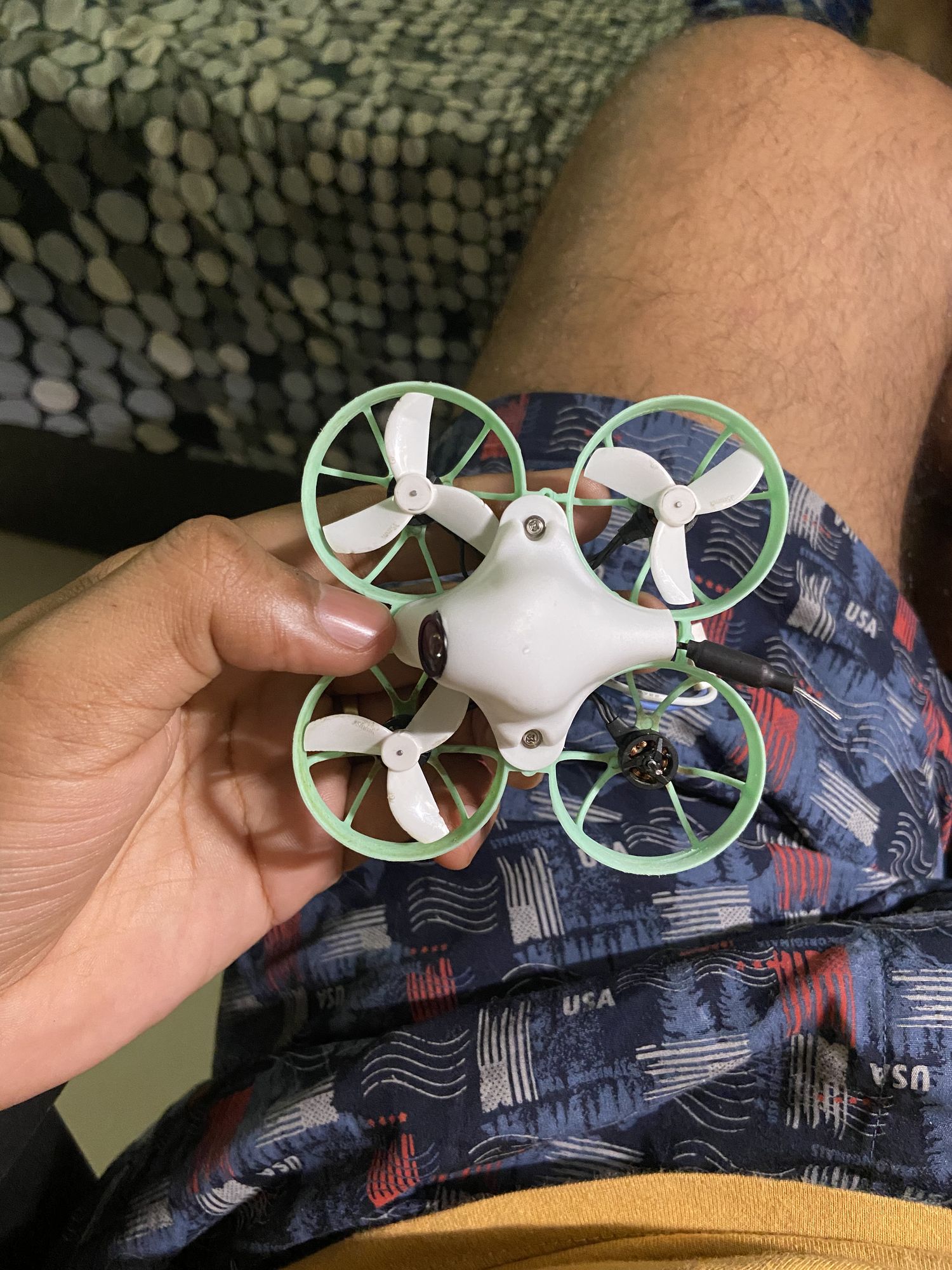
It was, I think, a Meteor 65 Pro. That's one of the first mistakes I made. Instead of buying a normal version, I bought a pro version, which is pretty hard to control. Once I got a handle on it, it was pretty amazing. I couldn't navigate through any space, and I was kind of switching between the angle mode and the acrobat mode. Acrobat mode is like a professional mode, and angle mode is for beginners who are still learning and don't know how to balance the drone.
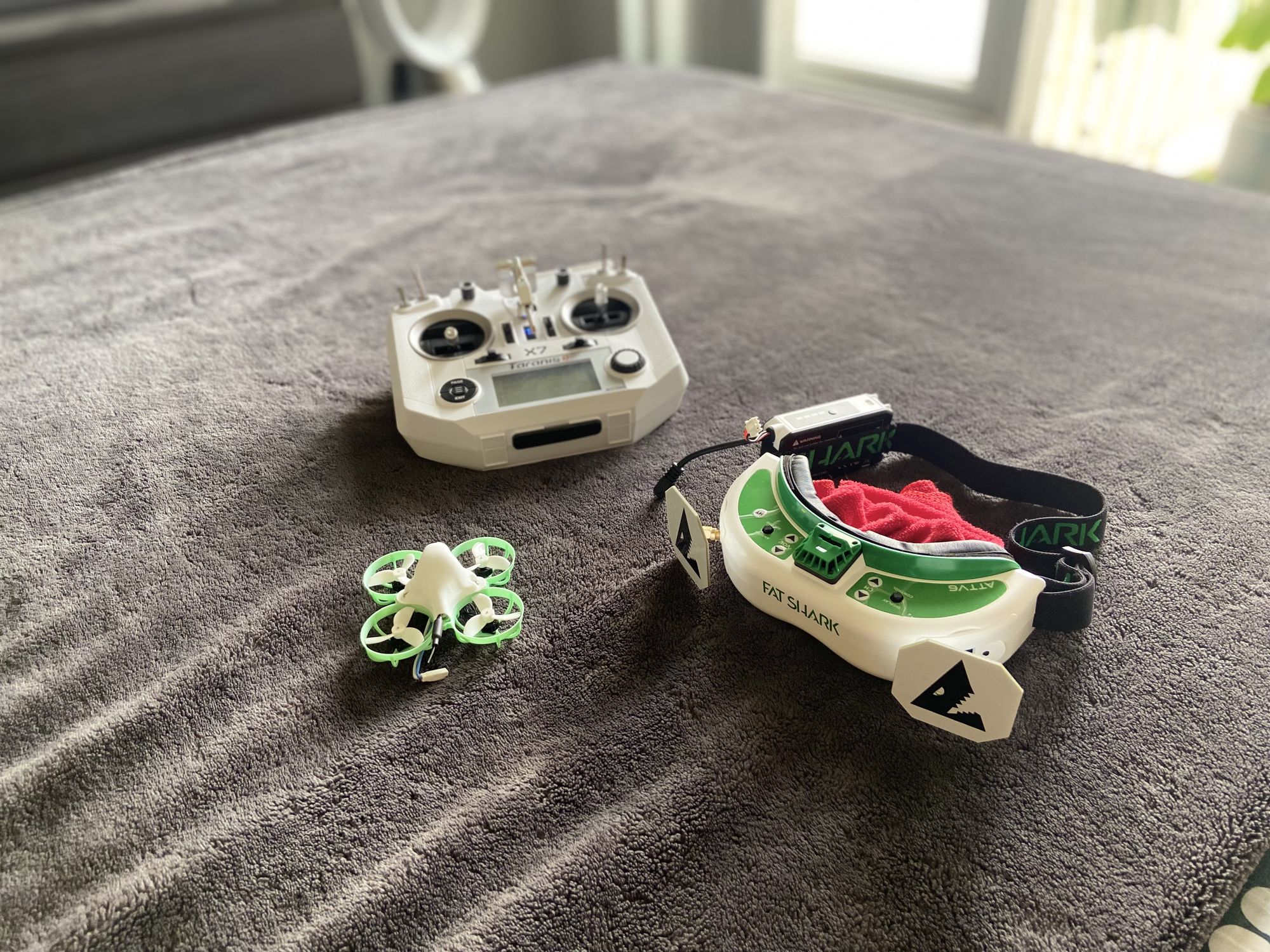
There are three main things I invested in:
- The drone itself: a tiny whoop from Meteor, the Meteor 65 Pro. It cost me around 12,000. The good part is that it comes with the drone, the camera, everything inbuilt, and even the receiver as well. It comes with a couple of batteries and some extra propellers, so you get everything with that. For that cost, it is much cheaper than an analog drone.
- The controller: I didn't want to buy a cheaper controller, so I bought a Taranis Q X7 from FrSky. That was a pretty popular model at that point in time. Even though it is very bulky, it is the most beginner-friendly controller I could find because it's so big. You can get fine-grained control with your thumb. The more it becomes smaller, the harder it becomes for you to keep the control precise.
- The goggles: The other mistake I made was that I also bought a 915 MHz module, which is pretty much not legal in India, so I could never use it. I had to buy another ExpressLRS controller on top of it.
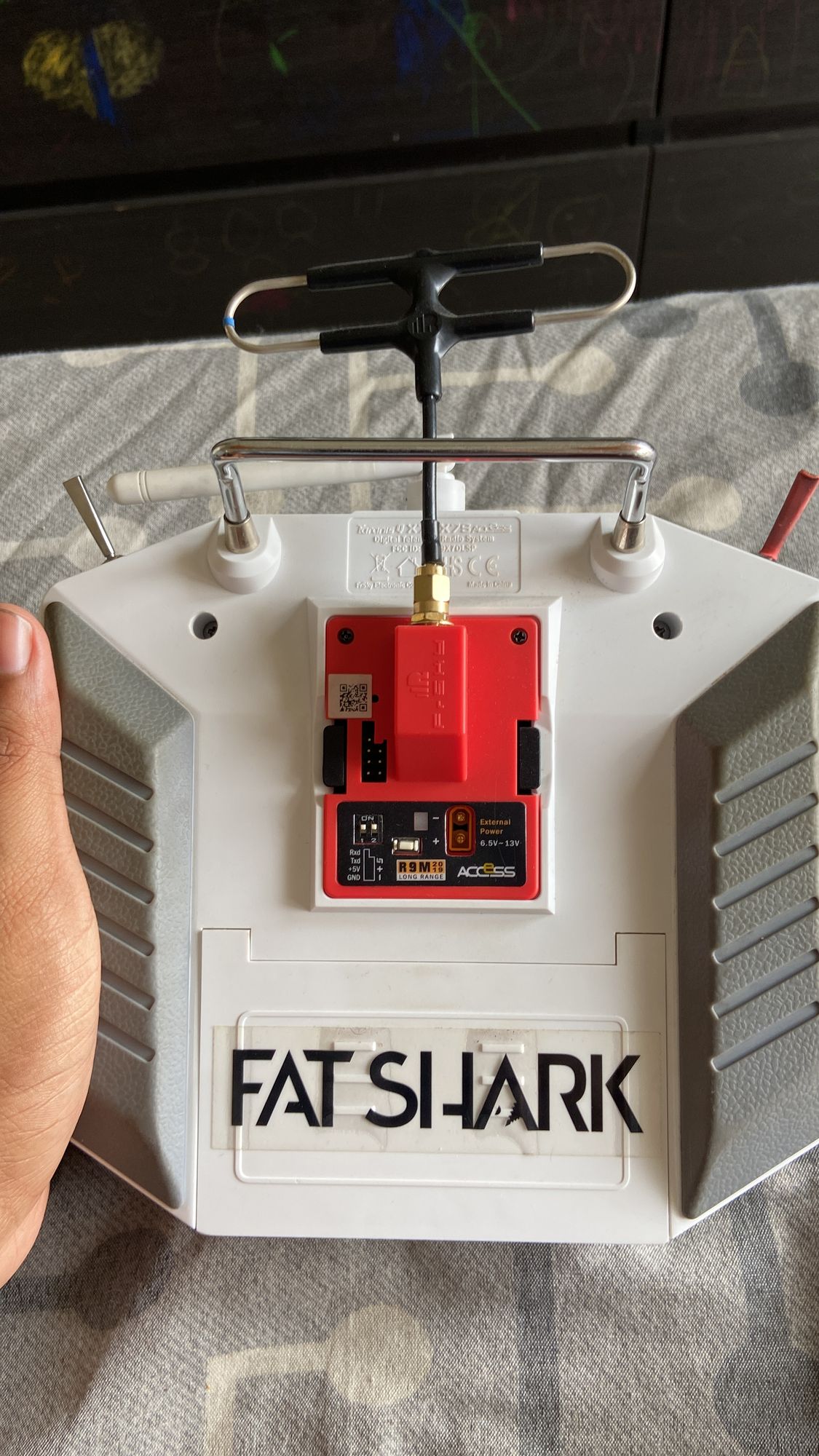
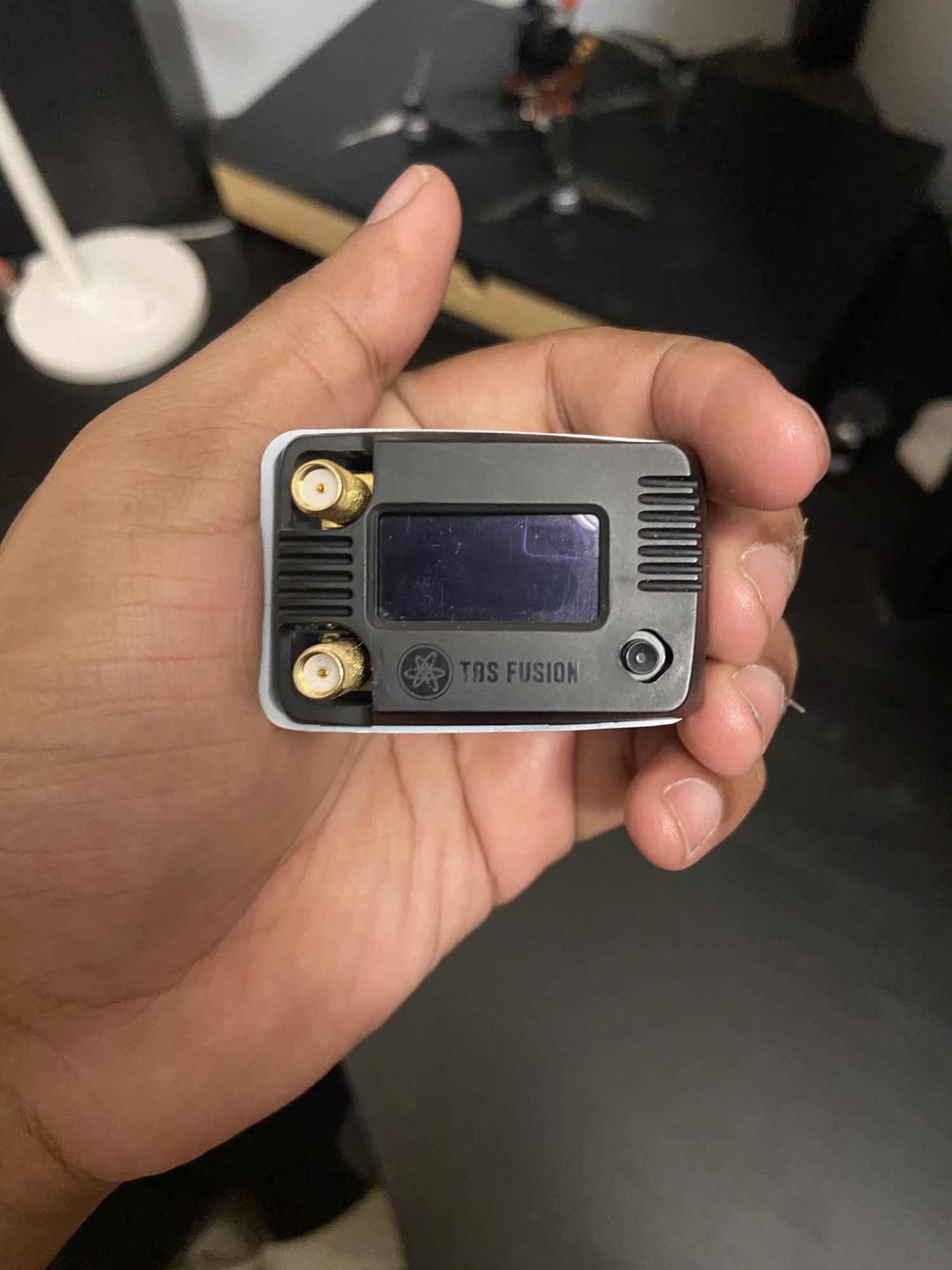
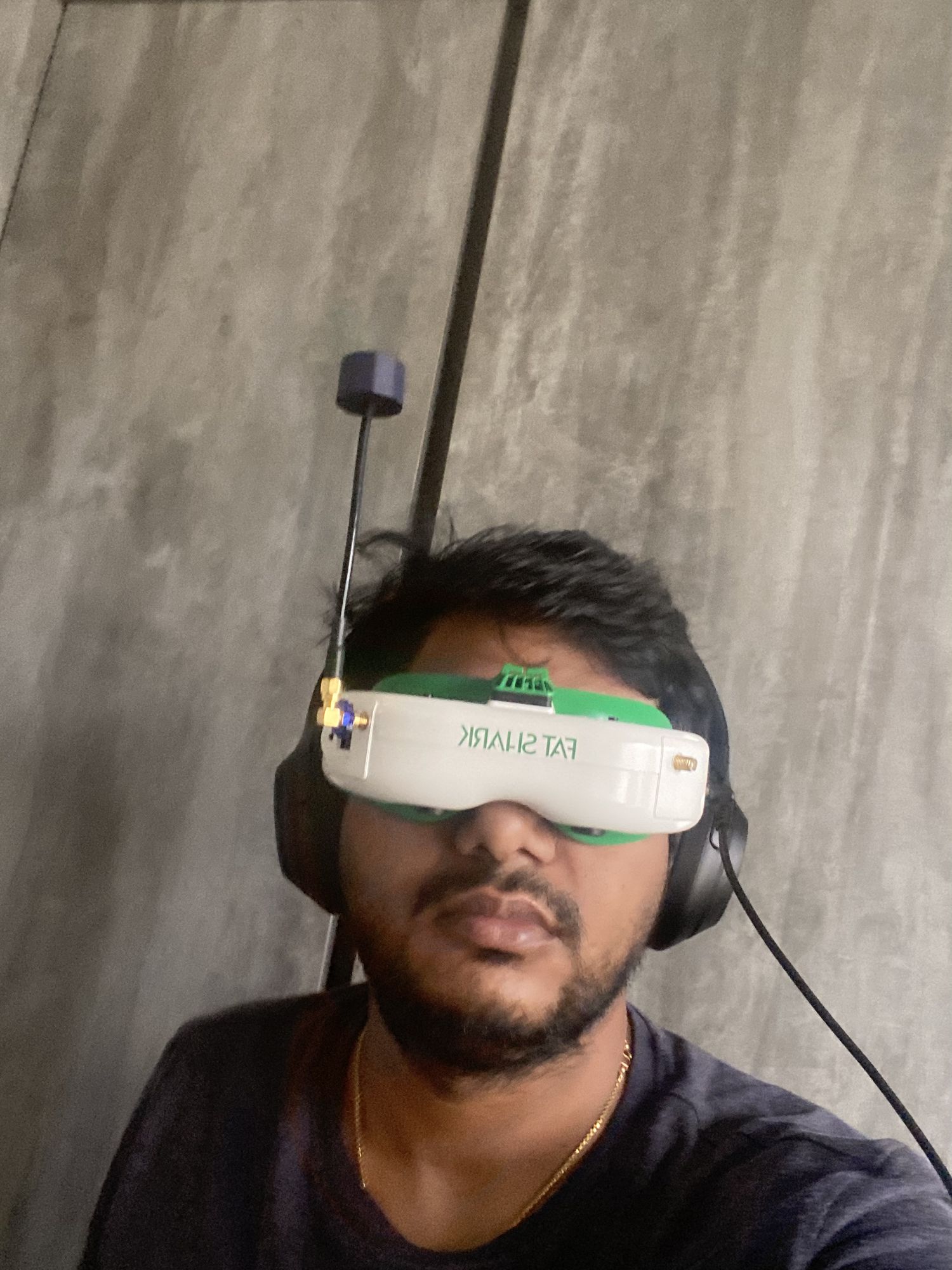
At that point, my budget was around 18,000 for the controller, 12,000 for the drone, and 35,000 for the goggles. It's not an OLED. It's a micro LCOS, which is pretty clear, but you can still feel the gray from the black bleeding over. It's not exactly OLED quality, but that's the one I got. It was available in India, and Fat Shark, at that point in time, had a lot of reputation as well, around, I think, 2019 or 2020. I need to recall, so it was pretty good. It came with the default factory receiver as well, which I later upgraded to a TBS Fusion receiver, which has much more control and also better reception quality.
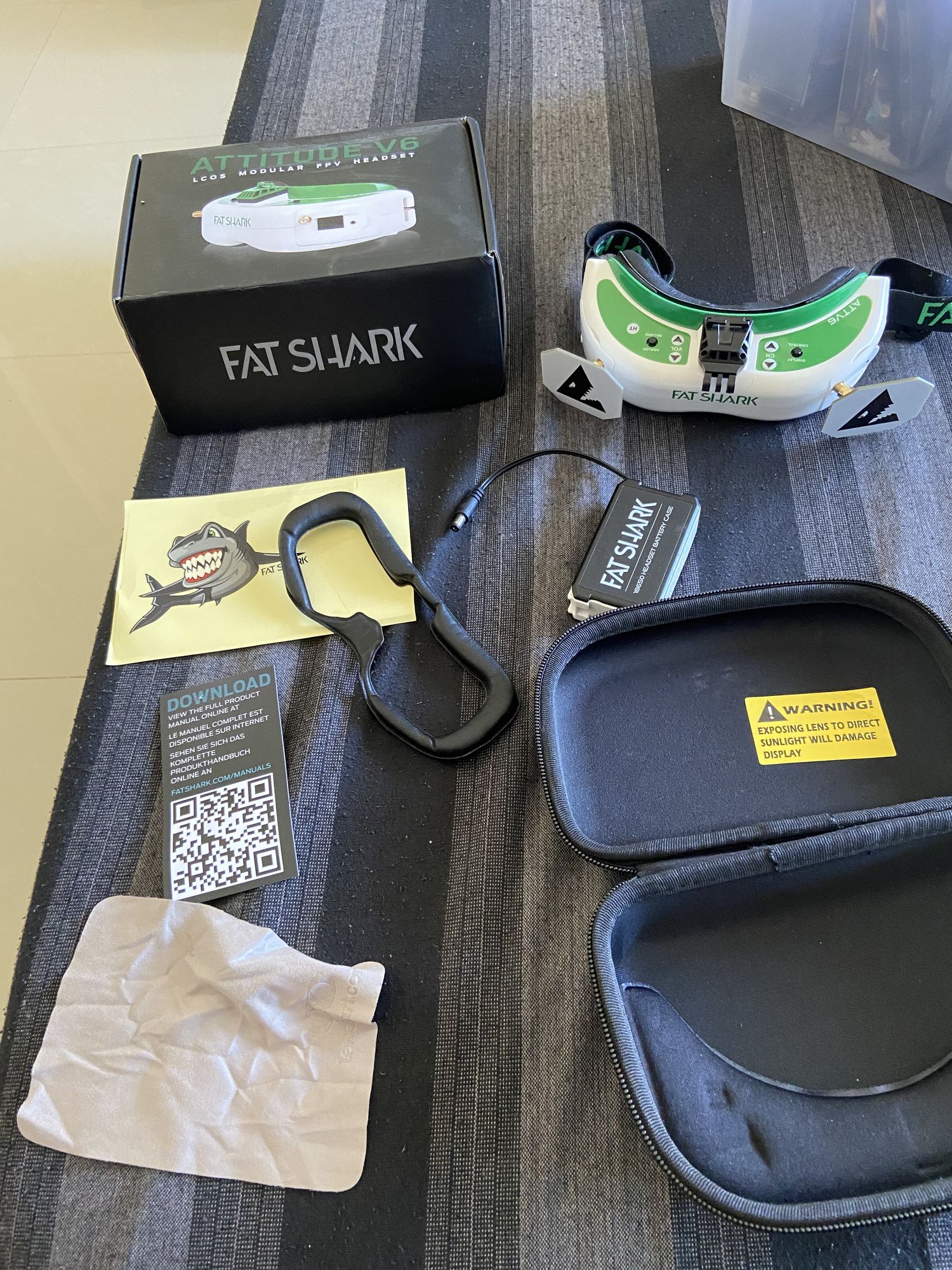
At that point, my investment came to around 12,000 for the drone, 18,000 for the controller, and 35,000 for the goggles itself. That got me into the hobby. The entry price itself is pretty steep, but still, I had a lot of fun with it. I crashed it so many times. The good part is that you can fix it by yourself, and most of the time, the spare parts are available because these drones are meant to be beaten to the fullest and to be repaired. It's not like a DJI drone where you crash it and then you take it to a DJI service center. That's the fun part about these drones. That's how I started my journey towards FPV.
Then, later on, the first thing I did was upgrade the FPV analog receiver, because the Fat Shark one does the job — it has two patch antennas, but the reception quality becomes very bad once you go behind a wall, even one wall. That's one of the things I had. I had two options:
- A TBS FPV receiver
- RapidFire
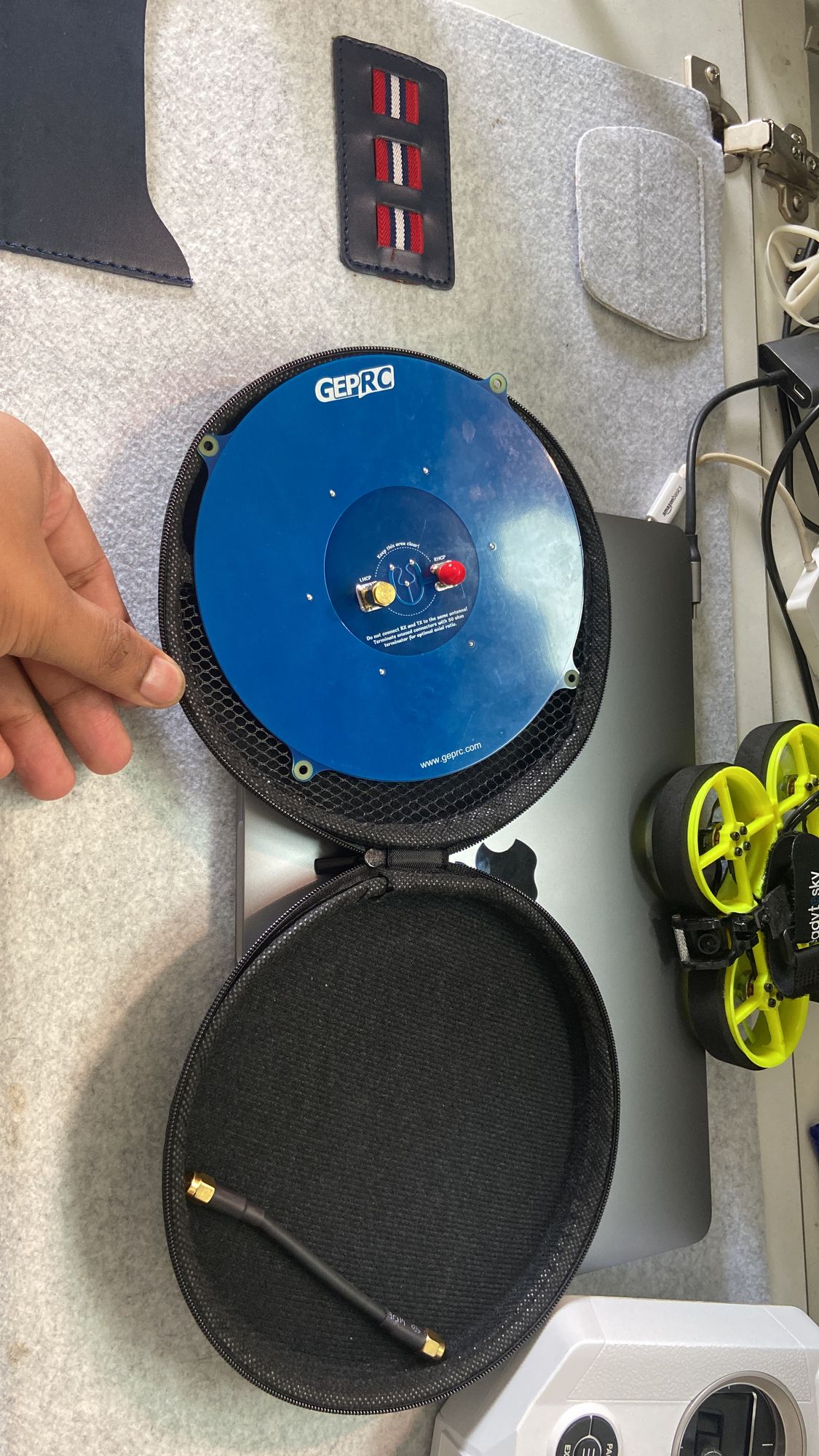
RapidFire is in pretty high demand. I couldn't find it anywhere, and I could find the TBS one, which is the second-best FPV receiver I could buy. I found it on rcmumbai.com, so I ordered one. I was pretty happy with it because it improved my reception quality a lot, but another catch is that it doesn't come with an antenna. I have to buy antennas extra, so it cost me around 12,000 for the TBS. I bought, I think (I don't remember the exact name), an antenna that Mr Steele uses, and it costs around 6,000. I bought one long omnidirectional antenna and one patch antenna. We can talk more about what omnidirectional and patch are later on, but these two are pretty important if you are flying across areas with multiple walls, concrete, or steel, where the reception could go pretty bad. You don't want to lose your drone. That's the last thing you would do, because once you lose it, either it's a known place to run to or it is not known, and you forget it forever, right?
That's the first upgrade I did. After that, I liked the concept of open source. I had always been like, "Should I upgrade to DJI or not?" When HDZero came in, it was like a good part of both worlds: the same goggles would work both on analog with my TBS and also with digital. HDZero itself is digital, so that was a pretty exciting thing. I kind of imported it from Europe, and it got stuck in customs, with a lot of back and forth and setting up some custom amount. Finally, it cost me around 60,000. Just the HDZero controller and the goggles are pretty amazing. The first time I'm getting a glimpse of the world and the first time getting a glimpse of the HD feed.
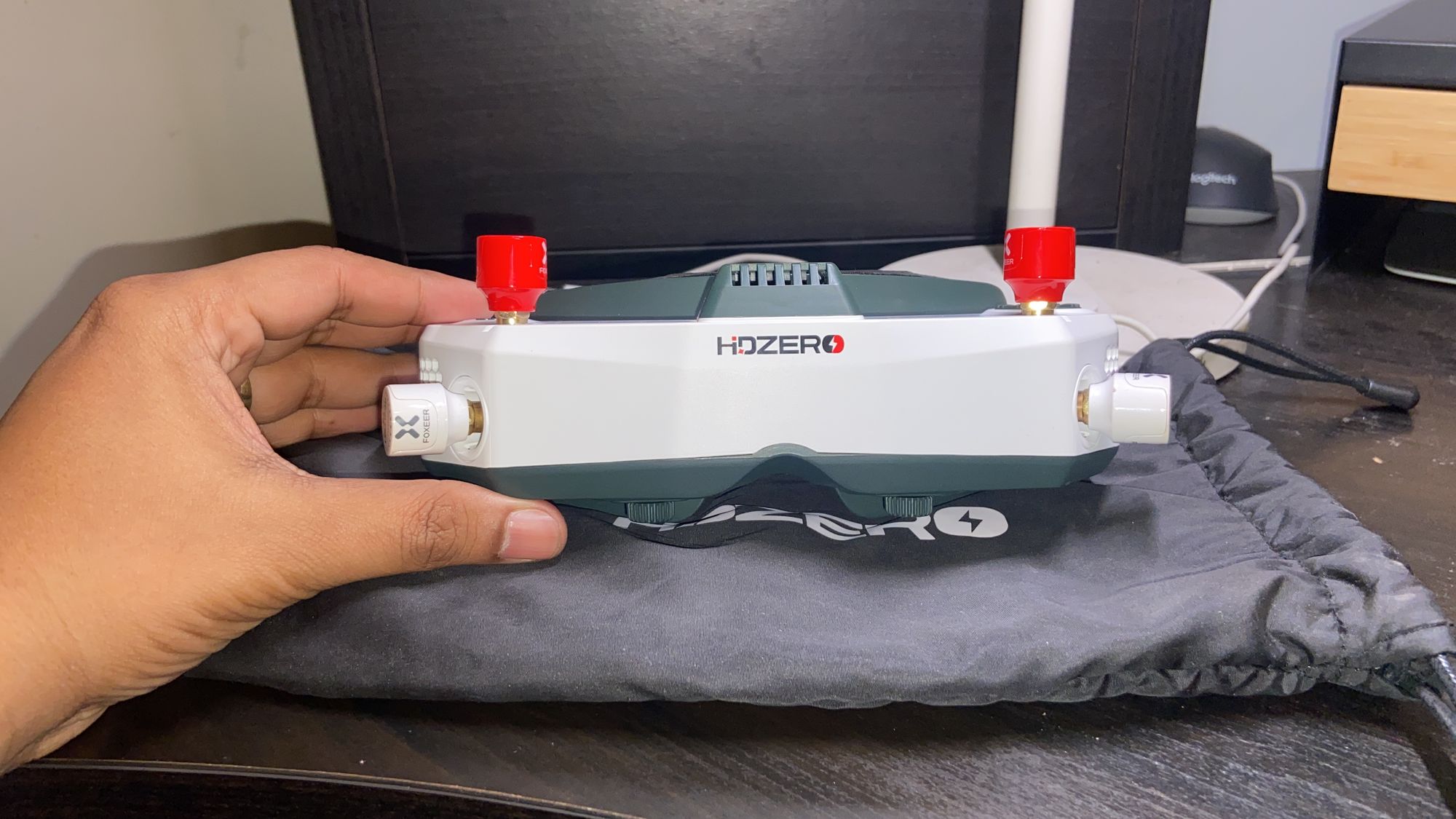
The key part is that I also ordered multiple things along with it, like around HDZero VTX. I ordered three 1x VTX and one bigger one with a higher transmission 1 W VTX, so it was a day-and-night difference. I had it, and it was pretty amazing times with HDZero. Later, I sold my Fat Shark because it was just gathering dust, and after that, I decided to move towards DJI. I liked HDZero, but latency was not my main importance. I wanted a clear feed, and whenever I compare videos, it's always like this: HDZero is better than analog, and DJI is better than HDZero. I thought I'll be doing a lot of racing, but I never got the time because I need to travel across different states. I thought I would do it more for relaxation for myself. I wanted to go with DJI because the feed is a day-and-night difference even from HDZero, so I sold my HDZero and officially entered into DJI. I ordered the DJI goggles from the US. One of my friends bought it from there. It cost me around 72,000, which is pretty expensive.
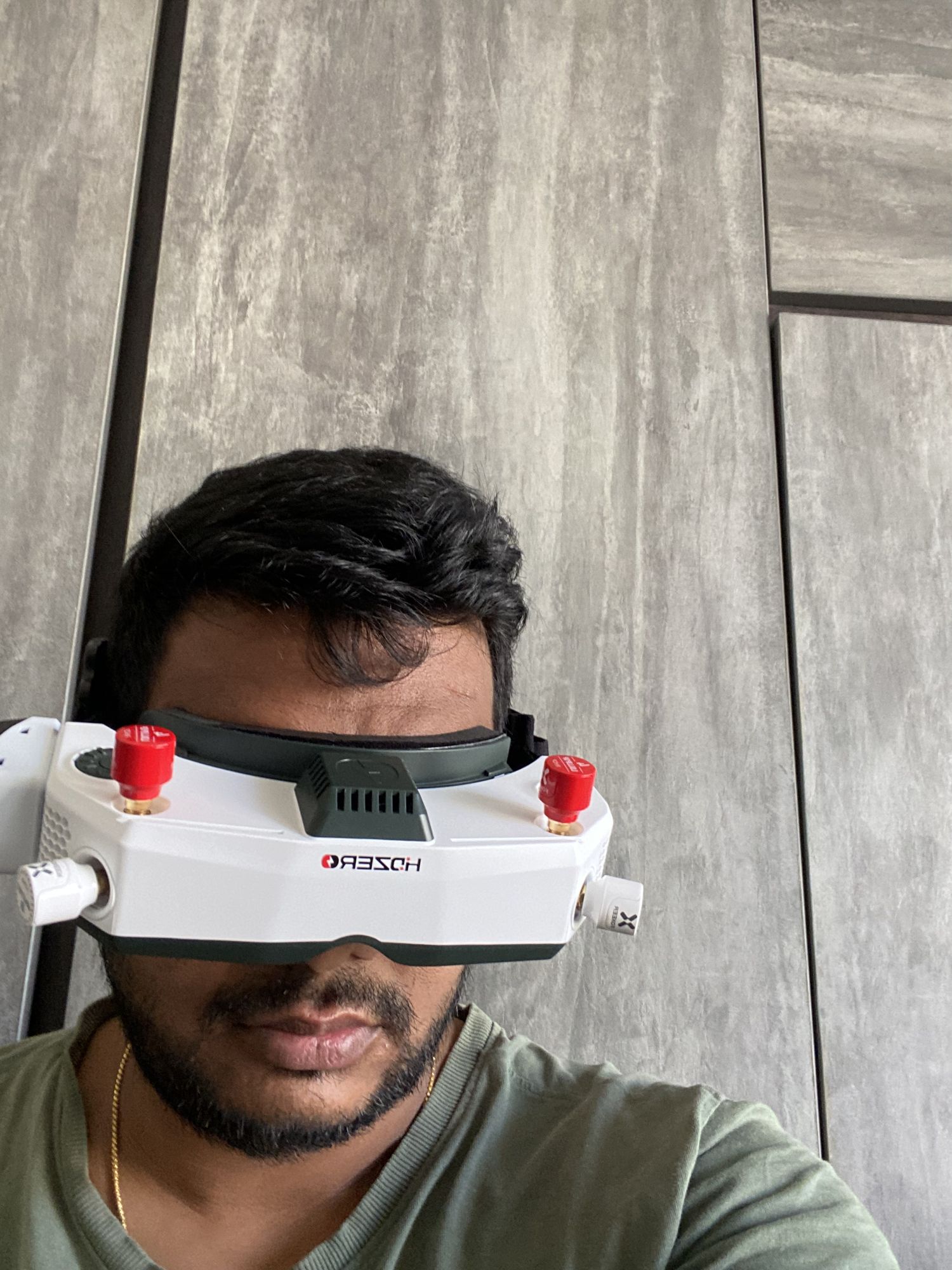
The jump was kind of crazy, starting from 35,000 with Fat Shark, then going up to 60,000 with HDZero, and then 72,000 for DJI goggles. At that point, that's the time it was released, and I was very excited about the form factor: how bulky the first version of the goggles would look, and how the second version was so slim it looked no different than a very tiny alien wearing it. I then started entering slowly into the DJI part.
Learnt from Joshua Bardwell videos, one at a time — "You're going to learn something today."
Currently, I do have 22 drones, some of them still analog. My goal is that one day analog goggles will become much cheaper so that I can bring it back to life, but so far it doesn't happen. I have only five to six analog drones and around seven DJI drones with different versions of it, like some of them with Vista, some of them with the original unit that they call it, some of them with the O3, and a few of them with O4s as well.
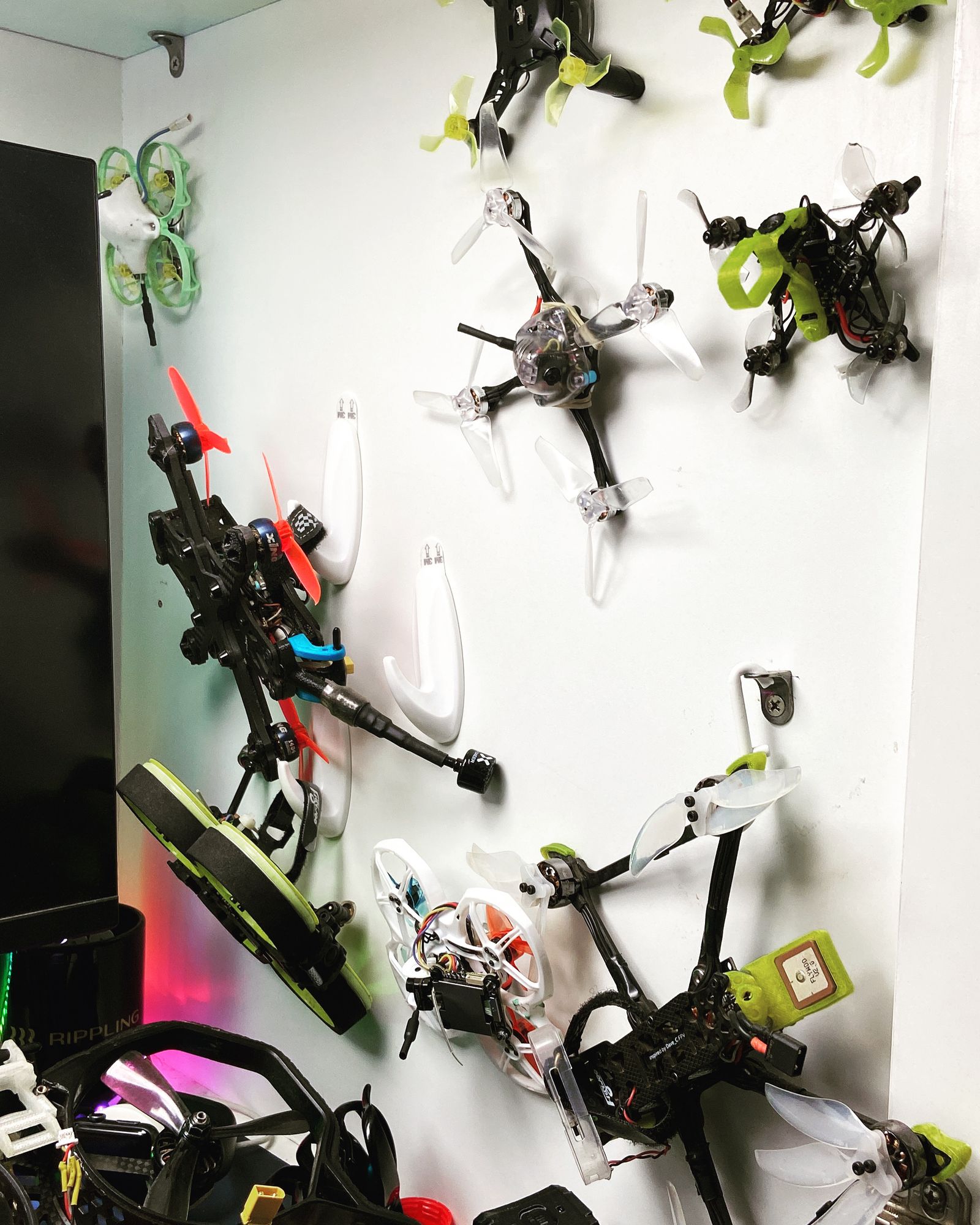
I have a range of devices with DJI, and analog HDZero is one thing I still have. I have one drone with a 1 W VTX and one with an S version of it, but I might give it back because I don't have any idea of moving back to HDZero. Definitely, analog is something I would go back to as well, because there are two parts:
- I get the latency, and I just go with analog.
- I want the clarity, and I go with DJI.
I don't feel I would ever go back to HDZero unless there is a need or they catch up with the quality of DJI or Walksnail.
That is how my journey is. I have a bunch of videos I took whenever I go for a tour. Some places are restricted, so I get disappointed. I don't get a chance to fly them, but in some places I have good feed, and really, playing them back gives me an amazing memory of the place I was in.
Every time I fly, I always get scared because if I'm flying over the ocean, there's a 50/50 chance that the drone might not return. Every time it returns, you feel proud if it is able to recover. So far, I haven't lost any drone because I never give up. Multiple times, I lost it in places where even humans cannot go, like in the middle of the forest where there are a lot of wild boars, and also in another place where it was literally in the middle of a lake, but there was no one. I was able to recover so far. I'm lucky and feel happy, but you need to keep in mind that every time you launch your drone, there is a 50% chance it might not return. That's the thrill part about it.
I'll also make sure we check the guidelines and rules and fly safely. That's one of the reasons I couldn't fly it as much as I want. I hope DGCA makes the rules a little more flexible so that we can fly them across more places.
That is one of the reasons I would say start with a tiny whoop, because a tiny whoop is allowed in more places than you imagine. Even in the worst case, if it's not allowed, you could just fly it within the room or a home wherever you are staying, so you always get to fly it wherever you are. That's why I do have a good range of tiny whoops and some of the 5-inch drones, which I fly very rarely compared to the tiny whoops.